
Call us now :08045804496
 Send Inquiry
 Send Inquiry
VCP Plasma Treater
MOQ : 1 Unit
VCP Plasma Treater Specification
- Drive Motor
- Servo/Electric Motor
- Product Type
- VCP Plasma Surface Treater
- General Use
- Surface Activation & Cleaning
- Material
- Stainless Steel Body, Industrial-grade Components
- Type
- Atmospheric Plasma Treater
- Capacity
- 0.5-10 m/min (Treatment Speed)
- Weight (kg)
- Approx. 50-75
- Computerized
- Yes
- Automatic
- Yes
- Control System
- PLC/Touch Screen
- Cutting Function
- Surface Treatment (No Cutting)
- Cooling System
- Air Cooling Built-in
- Drive Type
- Electric/Servo Motor Driven
- Voltage
- 220V/50Hz or Customizable
- Dimension (L*W*H)
- 500 x 400 x 1100 mm (Approx.)
- Feature
- Uniform Plasma Distribution, Enhanced Adhesion, Compact Design
- Color
- Industrial Silver
- Motor
- High Precision Servo Motor
- Mechanical Precision
- High
- Software Detail
- Manual/PLC Supported
- Smart TV Features
- Built-in WiFi, Screen Mirroring
- Sleep Timer
- Yes
- USB Ports
- 2
- Refresh Rate
- 60 Hz
- Viewing Angle
- 178
- Operating System
- Android
- Remote Battery Type
- AAA
VCP Plasma Treater Trade Information
- Minimum Order Quantity
- 1 Unit
- Supply Ability
- 10 Units Per Day
- Delivery Time
- 4-5 Week
- Main Domestic Market
- All India
About VCP Plasma Treater
We are the well-established name in industry, engaged in manufacturing, exporting and supplying high performing Dyne A Mite VCP Plasma Treater. The offered plasma treater is manufactured using optimal quality raw materials and advanced technology under the vigilance of our experienced professionals. Provided plasma treater is available in different specifications to meet the diverse requirements of our esteemed clients. Widely used in medical, semiconductor and other industries for cleaning applications, this Dyne A Mite VCP Plasma Treater can be avail from us at rock-bottom prices.
Features:
- Rugged design
- Excellent finish
- Optimum performance
- Low maintenance
Product Details:
| Brand | Enercon |
| Packaging Type | packet |
| Size | Customized |
| Power Source | Single and Three Phases |
| Production Capacity | 10 Machines/Month |
| Country of Origin | Made in India |
Advanced Surface Activation Technology
Harnessing dielectric barrier discharge with atmospheric plasma, the VCP Plasma Treater efficiently activates and cleans a wide array of material surfaces. Its flexible design allows users to select single or multiple nozzles, optimizing process control for diverse industrial requirements. Reliable, uniform plasma distribution ensures repeatable surface energy improvement up to 70 mN/m, boosting adhesion for various downstream processes such as bonding, coating, and printing applications.
Operator-Friendly and Safe
Designed with industrial ergonomics in mind, this plasma treater features a built-in air cooling system, integrated emergency stop, and overload protection. Its intuitive PLC/touchscreen interface provides manual and automatic operation modes, supporting both table-top and inline installations. The compact construction and moderate noise level (<70 dB) make it suitable for various manufacturing environments.
FAQs of VCP Plasma Treater:
Q: How does the VCP Plasma Treater enhance adhesion on treated surfaces?
A: This plasma treater boosts surface energy up to 70 mN/m, effectively modifying surface chemistry and cleaning contaminants. This elevated surface energy leads to significantly improved adhesion for coatings, inks, adhesives, and other bonding processes on metals, plastics, and composites.Q: What types of materials can be treated using this plasma system?
A: The VCP Plasma Treater is designed for use with metals, plastics, electronic components, and composite materials. Its adjustable treatment width and configurable nozzles allow for efficient processing of substrates in varied industrial sectors.Q: When should operators use plasma surface treatment over traditional methods?
A: Plasma treatment is ideal when high surface cleanliness, improved wettability, or enhanced adhesion is required. It outperforms mechanical or chemical pretreatment in situations where substrate integrity, environmental considerations, and process reliability are important.Q: Where can the VCP Plasma Treater be installed in a production line?
A: With table-top and inline installation options, this plasma treater can be integrated at any stage where surface activation or cleaning is necessary, including pre-coating, printing, or assembly processes.Q: What are the operational and safety features of the VCP Plasma Treater?
A: Key operational features include automated/manual PLC-supported controls, ambient to 40C temperature operation, and high-precision servo motor drive. Safety is ensured by built-in emergency stop, overload protection, and an integrated air-cooling system.Q: How does the plasma treatment process work in this system?
A: The system generates plasma at atmospheric pressure using dielectric barrier discharge. Input gas (compressed air or noble gases) is energized and directed over the material, removing contaminants and activating the surface within the customizable treatment width.Q: What benefits can industries expect from using this plasma treater?
A: Industries benefit from uniform, reliable surface activation that improves product quality, increases process speeds (0.5-10 m/min), and reduces the need for hazardous chemicals. Its adaptability and automation support make it an efficient solution for modern manufacturing.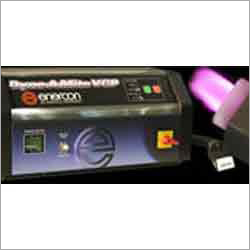
Tell us about your requirement

Price:
Quantity
Select Unit
- 50
- 100
- 200
- 250
- 500
- 1000+
Additional detail
Mobile number
Email

More Products in Surface Treatment Equipments Category

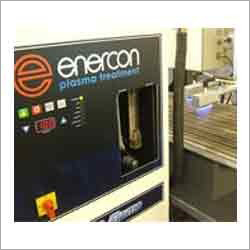
Flame Plasma Treater
Price Range 150000.00 - 800000.00 INR
Minimum Order Quantity : 1 Unit
General Use : Surface activation and cleaning
Control System : Other, Manual / Pneumatic
Drive Type : Other, Manual or Pneumatic
Color : Other, Blue / Silver / Custom
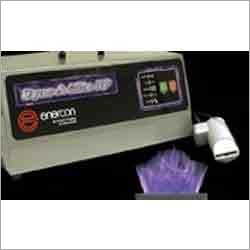
Dyne A Flame Surface Treating Systems
Price Range 150000.00 - 800000.00 INR
Minimum Order Quantity : 1 Unit
General Use : Plastic and Polymer Surface Activation
Control System : Other, PLC Based
Drive Type : Electric
Color : Other, Multi color (as per company standard)
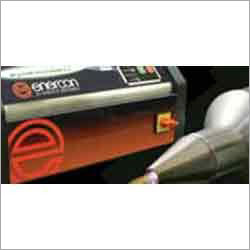
HP Blown Arc Plasma Treater
Price Range 150000.00 - 800000.00 INR
Minimum Order Quantity : 1 Unit
General Use : Surface Treatment for plastics, films, rubbers, metals and composites
Control System : Microprocessor/PLC based
Drive Type : Electric
Color : Other, Blue & White
IT Blown Ion Plasma Treater
Price Range 150000.00 - 800000.00 INR
Minimum Order Quantity : 1 Unit
General Use : Surface Treatment / Cleaning / Activation for Adhesion
Control System : Digital Automated Panel
Drive Type : Electric
Color : Other, Industrial Grey / Blue

 Send Inquiry
Our Products


23/10, Elluvapalli, Nallur (P.O), Bagalur Road,Hosur - 635103, Tamil Nadu, India

Mr Ganesh Kumar
(Sales & Marketing)
Mobile :08045804496
 Send Inquiry
 Send SMS
Developed and Managed by Infocom Network Private Limited.
 English
 Spanish
 French
 German
 Italian
 Chinese (Simplified)
 Japanese
 Korean
 Arabic
 Portuguese